Let’s be real—when your knee sounds like Rice Krispies every time you climb stairs, or your back pain has you popping ibuprofen like candy, or that torn ACL from weekend warrior basketball is keeping you sidelined, you need more than a general practitioner telling you to “rest and ice it.” You need serious orthopedic expertise, and not all orthopedic centers are created equal.
I’ve watched family members limp through years of deteriorating joints before finally getting proper treatment, and the difference between an average orthopedic department and a truly excellent one is night and day. We’re talking about the difference between walking normally again versus struggling with chronic pain, between returning to the sports you love versus giving them up permanently.
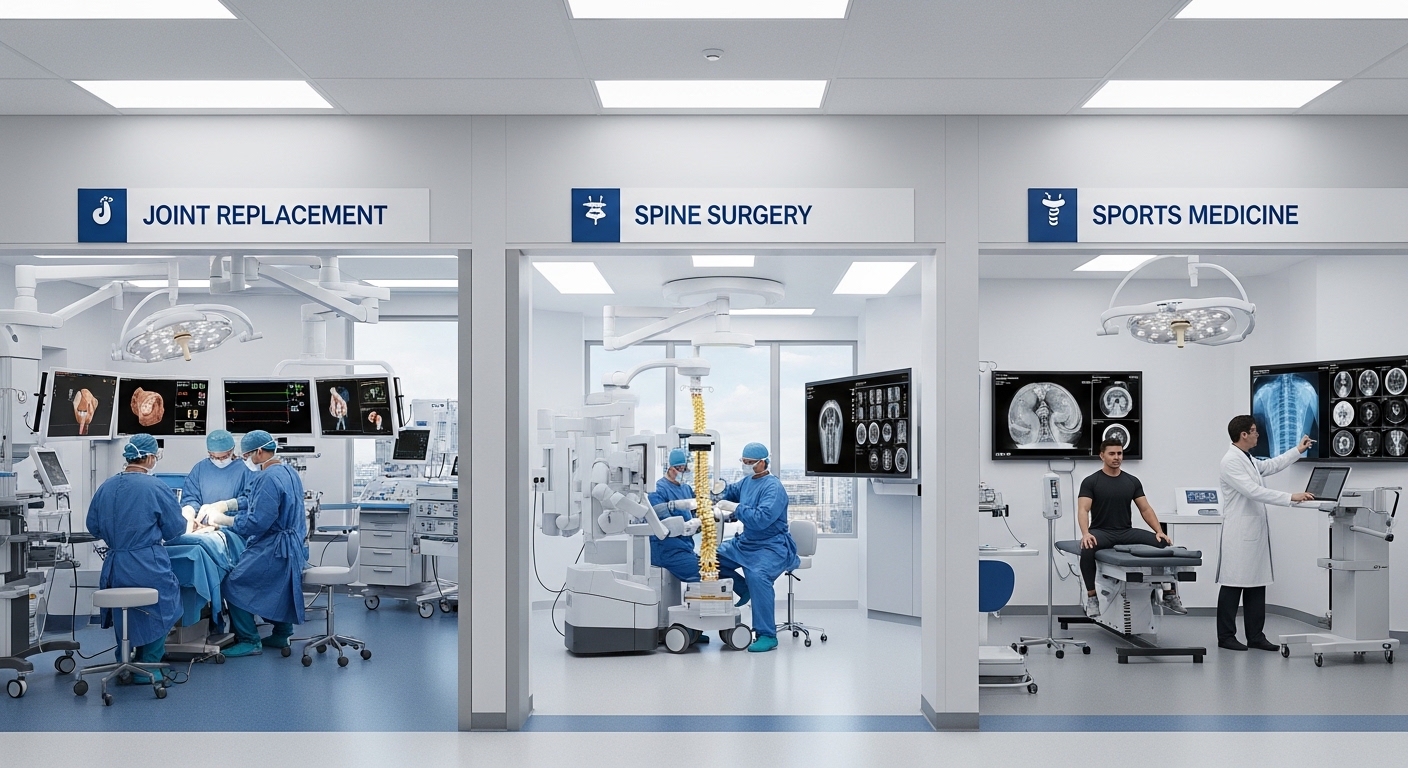
Choosing the right orthopedic surgery center for joint replacement, spine surgery, or sports medicine isn’t just about finding a doctor who can operate—it’s about finding a comprehensive program that handles everything from diagnosis through surgery to rehabilitation, all while treating you like a person instead of a medical chart number.
What Makes an Orthopedic Center Truly Excellent?
Before we dive into specific hospitals, let’s talk about what separates world-class orthopedic programs from mediocre ones. These factors matter enormously for your outcomes and recovery experience:
Surgical Volume and Specialization: There’s overwhelming evidence that surgeons who perform high volumes of specific procedures get better results. A surgeon doing 200+ knee replacements annually has seen every possible complication and anatomical variation. They’ve refined their technique through repetition in ways a general orthopedist doing 20 knee replacements per year simply can’t match.
The best orthopedic centers have surgeons who subspecialize intensely. You don’t want a jack-of-all-trades doing your complex spine fusion—you want someone who does nothing but spine surgery, day in and day out.
Advanced Technology and Techniques: Orthopedic surgery has evolved dramatically with robotic-assisted surgery, computer navigation systems, minimally invasive approaches, and custom implants. Top centers invest millions in this technology because it genuinely improves precision, reduces complications, and speeds recovery.
For joint replacements, robotic assistance allows submillimeter accuracy in implant positioning. That precision translates to better range of motion, longer implant lifespan, and reduced pain post-surgery. For spine surgery, navigation systems help surgeons avoid nerves and blood vessels during complex procedures.
Comprehensive Rehabilitation Programs: Surgery is only half the battle. Your recovery depends enormously on quality rehabilitation. Excellent orthopedic centers have integrated physical therapy programs with therapists specializing in post-surgical recovery. They don’t just hand you a sheet of exercises and send you on your way—they provide structured, supervised rehabilitation that ensures you regain strength and mobility properly.
Multidisciplinary Teams: Complex orthopedic cases often require coordination between surgeons, pain management specialists, physical therapists, radiologists, and sometimes rheumatologists or sports medicine physicians. Top centers facilitate this collaboration rather than leaving patients to coordinate care themselves.
Patient Outcomes Tracking: The best programs rigorously track outcomes—infection rates, readmission rates, patient satisfaction scores, functional improvement measures. They use this data to continuously refine techniques and protocols. Centers that can’t or won’t share outcome data should raise immediate red flags.
Top Orthopedic Centers for Joint Replacement
Joint replacement surgery—hips, knees, shoulders—has become incredibly sophisticated. Modern implants last 20-30 years, and surgical techniques allow faster recovery than ever before. Here are programs consistently delivering exceptional results:
Hospital for Special Surgery (New York, NY)
HSS is widely considered the best orthopedic hospital in the United States, if not the world. They perform more joint replacements than any other hospital in the country—over 9,000 annually—and their outcomes data is publicly available and impressive.
What sets HSS apart is their relentless focus on orthopedics. Unlike general hospitals where orthopedics is one department among many, HSS exists solely for musculoskeletal care. This specialization creates an environment where every nurse, anesthesiologist, and physical therapist is an expert in orthopedic care.
Their infection rates for joint replacement are extraordinarily low—well under 1% compared to the national average of around 2%. Their surgeons pioneered many modern joint replacement techniques, and they continue pushing innovation through research.
HSS offers same-day discharge for some joint replacements, meaning you’re home within hours rather than spending days in the hospital. This rapid recovery protocol, called Rapid Recovery, involves extensive pre-operative preparation, regional anesthesia techniques, and coordinated rehabilitation that gets patients mobile immediately after surgery.
The HSS website (https://www.hss.edu) provides detailed information about specific procedures, surgeon credentials, and outcome statistics. They’re transparent about results in ways that demonstrate confidence in their quality.
Mayo Clinic (Rochester, MN; Phoenix, AZ; Jacksonville, FL)
Mayo Clinic’s orthopedic department combines surgical excellence with Mayo’s hallmark comprehensive approach. If you have complex medical conditions alongside joint problems—diabetes, heart disease, autoimmune disorders—Mayo’s integrated care model ensures specialists coordinate treatment to minimize risks.
Mayo performs thousands of joint replacements annually across their three campuses, with Rochester handling the highest volume. Their surgeons are conservative in recommending surgery, thoroughly exploring non-surgical options first. When surgery is necessary, their complication rates and patient satisfaction scores rank among the nation’s best.
Mayo excels particularly in revision joint replacements—surgeries to replace failed implants from previous procedures done elsewhere. These are technically challenging cases requiring exceptional skill, and Mayo’s revision surgeons are sought out by patients whose initial surgeries went wrong.
Their physical therapy integration is seamless. Mayo’s PTs work closely with surgeons to customize rehabilitation protocols for each patient’s specific situation, ensuring optimal recovery.
Cleveland Clinic (Cleveland, OH)
Cleveland Clinic’s orthopedic program handles over 5,000 joint replacements yearly with outcomes that consistently beat national benchmarks. They’re ranked #2 in orthopedics nationally by U.S. News & World Report (https://health.usnews.com/best-hospitals), just behind HSS.
What distinguishes Cleveland Clinic is their research integration. Many of their surgeons are developing next-generation implants, testing new surgical techniques, and publishing research that shapes orthopedic practice globally. When you’re treated at Cleveland Clinic, you benefit from this cutting-edge expertise.
Their same-day joint replacement program has expanded dramatically. For appropriate candidates—generally younger, healthier patients—hip and knee replacements are performed as outpatient procedures with patients going home the same day. Recovery outcomes are excellent, and avoiding hospitalization reduces infection risk and costs.
Cleveland Clinic’s pain management approach is particularly sophisticated. They use multimodal analgesia—combining different medication types and regional anesthesia techniques—to control pain while minimizing opioid use. This reduces side effects and helps patients mobilize faster after surgery.
Rothman Orthopaedic Institute (Multiple locations in PA, NJ, NY)
Rothman is the largest orthopedic practice on the East Coast, performing over 5,000 joint replacements annually. They’ve developed a reputation for handling complex cases, including patients with severe deformities, previous failed surgeries, or challenging anatomy.
Rothman’s strength lies in their volume and specialization. Their joint replacement surgeons do nothing but joint replacements—hundreds per year each. This intense focus creates extraordinary expertise.
They offer robotic-assisted joint replacement using the Mako system, which provides real-time feedback during surgery to optimize implant positioning. Numerous studies show robotic assistance improves accuracy and can lead to better long-term outcomes.
Rothman’s rehabilitation program includes innovative approaches like aquatic therapy, which allows earlier range-of-motion work by supporting body weight in water. Their therapists work with patients from pre-surgery strengthening through complete recovery.
Leading Centers for Spine Surgery
Spine surgery is perhaps the most delicate and complex orthopedic subspecialty. Your spine houses your spinal cord—damage there can cause permanent paralysis. You want surgeons who’ve done thousands of spine procedures, not someone learning on your back.
Johns Hopkins Hospital (Baltimore, MD)
Johns Hopkins neurosurgery and orthopedic spine surgery departments are world-renowned for handling the most complex spinal conditions. They routinely treat patients who’ve been told their conditions are inoperable or have failed multiple previous surgeries.
Hopkins’ spine surgeons pioneered minimally invasive spine surgery techniques that reduce tissue damage, blood loss, and recovery time. Procedures that once required large incisions and weeks of recovery can now be done through tiny incisions with patients going home within days.
Their spine tumor program is exceptional. Removing tumors from the spine requires extraordinary precision to eliminate cancer while preserving neurological function. Hopkins’ surgeons use intraoperative monitoring, advanced imaging, and meticulous technique to achieve outcomes that few other centers can match.
Hopkins also excels in complex deformity correction for conditions like severe scoliosis or kyphosis. These surgeries might involve fusing multiple vertebrae and can take 8-12 hours, requiring surgical teams with exceptional stamina and skill.
Stanford Health Care (Stanford, CA)
Stanford’s spine center combines neurosurgeons and orthopedic spine surgeons who collaborate on complex cases, bringing different perspectives and expertise. This multidisciplinary approach means each patient benefits from multiple expert opinions.
Stanford leads in robotic spine surgery, using advanced navigation systems that provide real-time 3D visualization during procedures. This technology allows incredibly precise screw placement in vertebrae, reducing the risk of nerve damage or malpositioned hardware.
Their motion-preservation techniques are particularly advanced. Instead of fusing vertebrae (which eliminates motion at that spinal level), Stanford surgeons often use artificial disc replacement, which maintains flexibility while eliminating pain. This is especially valuable for younger patients who want to maintain active lifestyles.
Stanford’s pain management integration is excellent. Many spine surgery candidates have lived with chronic pain for years, and Stanford’s pain specialists work with surgeons to optimize pain control before, during, and after surgery.
Barrow Neurological Institute (Phoenix, AZ)
Barrow is exclusively focused on neurological and spine conditions, creating depth of expertise hard to match. They’re not distracted by other medical specialties—spine surgery is what they do, period.
Barrow’s neurosurgeons perform over 3,000 spine surgeries annually, including the most complex cases: spinal cord tumors, cervical deformities, revision surgeries, and traumatic injuries. Their complication rates are exceptionally low despite handling cases other hospitals decline.
What impresses me about Barrow is their commitment to evidence-based medicine. They rigorously study which techniques and approaches produce the best outcomes, then adopt those practices across their team. This means you get treatment based on solid evidence, not individual surgeon preference or outdated tradition.
Barrow’s rehabilitation program includes cutting-edge approaches like exoskeleton training for spinal cord injury patients, helping some regain mobility doctors once thought impossible.
University of California San Francisco (UCSF) Medical Center
UCSF’s spine center handles extraordinarily complex cases including spinal deformity in children and adults, spinal cord injury, and degenerative conditions. Their surgeons are leaders in developing new surgical approaches that reduce invasiveness while maintaining effectiveness.
UCSF pioneered outpatient spine surgery for appropriate cases. Procedures like microdiscectomy for herniated discs can now be performed with patients going home the same day, recovering faster with less disruption to their lives.
Their research program is extensive, studying everything from optimal surgical approaches to rehabilitation protocols to pain management strategies. This research directly benefits patients through continuously improving care.
Premier Sports Medicine Departments
Sports medicine encompasses everything from ACL reconstruction to rotator cuff repair to cartilage restoration. Athletes—from weekend warriors to professionals—need specialists who understand the unique demands of returning to sport.
Andrews Institute (Gulf Breeze, FL)
Founded by Dr. James Andrews, the legendary surgeon who’s operated on countless professional athletes, Andrews Institute is synonymous with sports medicine excellence. They treat everyone from high school athletes to Olympic competitors to NFL stars.
Andrews Institute surgeons have pioneered numerous techniques in ACL reconstruction, Tommy John surgery for baseball pitchers, and cartilage restoration. Their outcomes for returning athletes to competition are exceptional.
What sets Andrews apart is understanding the psychology and demands of athletes. They don’t just fix the injury—they help athletes return to peak performance. Their rehabilitation protocols are aggressive but safe, pushing athletes to regain strength and confidence.
The institute offers advanced treatments like platelet-rich plasma (PRP) therapy and stem cell procedures for appropriate cases. While these treatments aren’t miracle cures, Andrews’ research helps identify when they genuinely help versus when they’re unnecessary.
Steadman Clinic (Vail, CO)
Located in Vail, Colorado—ski injury central—Steadman Clinic treats elite athletes from around the world. Dr. Richard Steadman developed microfracture surgery for cartilage repair, and the clinic continues innovating in cartilage restoration.
Steadman’s surgeons understand that weekend athletes and recreational competitors deserve the same cutting-edge treatment as professionals. They apply techniques developed for Olympic skiers to treat anyone committed to returning to their sport.
Their ACL reconstruction program emphasizes graft selection based on individual patient factors—age, activity level, anatomy. They’re not dogmatic about using one technique for everyone, instead customizing approaches for optimal outcomes.
Steadman’s altitude training center helps athletes regain conditioning in Vail’s high-altitude environment, which accelerates fitness gains and prepares athletes for return to competition.
Hospital for Special Surgery Sports Medicine Institute
HSS isn’t just excellent for joint replacement—their sports medicine program treats athletes at every level with world-class expertise. They’re the official hospital for multiple New York professional sports teams, treating Knicks, Mets, and Rangers players.
HSS surgeons perform thousands of ACL reconstructions, rotator cuff repairs, and other sports procedures annually. Their outcomes for return-to-sport are exceptional, with high rates of athletes resuming competition at previous performance levels.
HSS offers advanced biologics treatments including PRP, bone marrow aspirate concentrate, and cartilage cell therapies. Their research helps identify which patients actually benefit from these treatments versus those who need traditional surgery.
Their return-to-sport testing is rigorous. Athletes undergo functional testing to ensure they’ve regained strength, flexibility, and neuromuscular control before clearance for competition. This reduces re-injury risk.
Choosing the Right Center for Your Needs
With all these excellent options, how do you choose? Consider these factors:
Match the center to your condition’s complexity: Straightforward cases like simple knee arthroscopy can be handled well at many quality regional orthopedic centers. Complex revisions, severe deformities, or rare conditions warrant traveling to top-tier specialized centers.
Geographic accessibility: Rehabilitation requires frequent appointments. A center two hours away might make sense for surgery but creates challenges for months of follow-up PT. Some centers offer coordinated care with local therapists to address this.
Insurance coverage: Top orthopedic centers are often in-network with major insurers, but verify coverage before proceeding. Out-of-pocket costs at out-of-network centers can be astronomical.
Surgeon-specific expertise: Don’t just choose a hospital—choose a specific surgeon whose expertise matches your condition. Research their training, experience, publication record, and patient reviews.
Second opinions: For major surgeries, get second opinions from different centers. Occasionally you’ll find disagreement about the best approach, and hearing multiple expert perspectives helps you make informed decisions.
Your mobility and quality of life are too important to settle for anything less than excellent orthopedic care. Do your research, ask questions, and choose centers and surgeons with proven track records of helping patients like you recover fully and return to the activities they love.