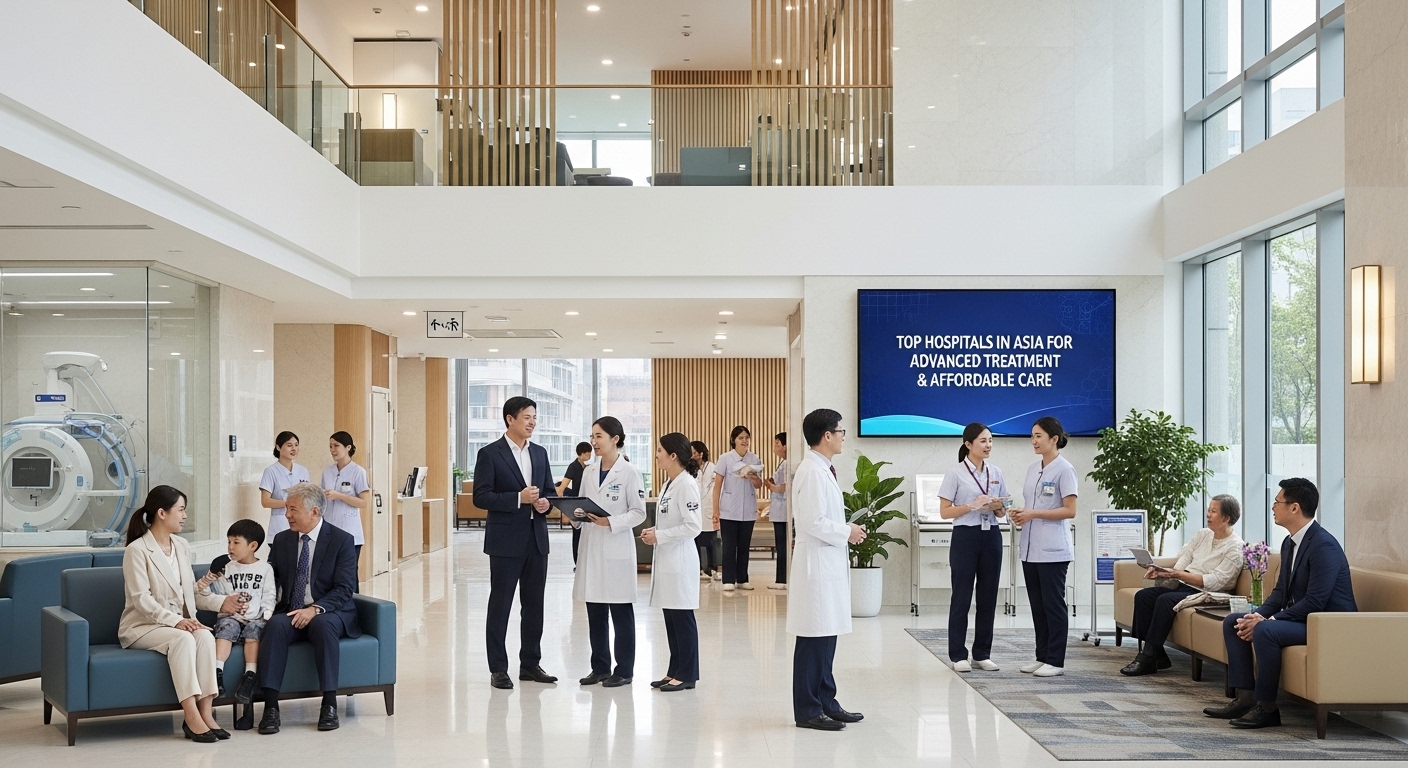
Asia has quietly become the world’s go-to destination for people seeking top-tier medical care without the bankrupting price tags of Western hospitals. I’m talking about hospitals with cutting-edge technology, internationally trained surgeons, and success rates that match or beat European and American facilities—all at a fraction of the cost.
The medical tourism industry in Asia is booming for good reason. You can get a heart surgery in Thailand for $15,000 that would cost $120,000 in the United States. A knee replacement in India might run you $7,000 compared to $50,000 back home. But here’s the thing—cheap doesn’t mean compromised quality. Many Asian hospitals are genuinely world-class.
Let me walk you through the best hospitals across Asia where you can get advanced treatment without selling your house to pay for it.
Bumrungrad International Hospital (Bangkok, Thailand)
If there’s one hospital that put Asian medical tourism on the map, it’s Bumrungrad. This place is absolutely massive—over 580 beds and seeing more than a million patients annually, with about half coming from outside Thailand.
What makes Bumrungrad stand out is how they’ve mastered the balance between clinical excellence and patient experience. The facility looks more like a luxury hotel than a hospital. But don’t let the fancy lobby fool you—the medical capabilities are serious.
They’re accredited by Joint Commission International (https://www.jointcommissioninternational.org), which is the gold standard for international healthcare quality. Their cardiology department performs thousands of complex procedures yearly, their oncology center offers treatments including advanced immunotherapy, and their orthopedic surgeons handle everything from sports injuries to complex joint replacements.
Cost-wise, you’re looking at savings of 60-80% compared to US hospitals. A coronary bypass surgery that costs $120,000 in America runs about $15,000-$20,000 here. They have dedicated international patient services with translators for over 20 languages, and they’ll help coordinate everything from airport pickup to hotel accommodation.
The only downside? Because they’re so popular with international patients, you might need to book well in advance for elective procedures.
Apollo Hospitals (Multiple locations across India)
Apollo is India’s largest healthcare chain, and they’ve been treating international patients since the 1980s. With over 70 hospitals across India, they’ve got the scale and experience that few Asian hospital groups can match.
Their flagship hospital in Chennai is where they really shine. The cardiac program is phenomenal—they’ve performed over 200,000 heart surgeries with success rates comparable to the best hospitals in the world. Their transplant program handles kidneys, livers, hearts, and even complex multi-organ transplants.
What I really appreciate about Apollo is their transparent pricing structure. They publish cost estimates on their website, and they stick to those numbers. No surprise bills showing up months later. A liver transplant that costs $500,000 in the US? Apollo does it for around $65,000-$80,000, including pre and post-operative care.
The Apollo Hospitals website (https://www.apollohospitals.com) has an international patient portal where you can upload medical records, get preliminary consultations, and even schedule procedures before you arrive. Their concierge service handles visa letters, airport transfers, and local accommodation.
Infrastructure in Indian hospitals sometimes lags behind Southeast Asian counterparts, but Apollo’s newer facilities are genuinely world-class. Just make sure you’re going to one of their major centers in Chennai, Delhi, or Hyderabad rather than smaller satellite locations.
Samsung Medical Center (Seoul, South Korea)
South Korea doesn’t get enough credit for medical excellence, which is crazy because their hospitals are absolutely top-tier. Samsung Medical Center in Seoul is affiliated with Sungkyunkwan University and represents the cutting edge of Asian healthcare.
This hospital is particularly strong in cancer treatment and robotic surgery. They have one of the highest concentrations of surgical robots in the world, and their surgeons have performed tens of thousands of robotic procedures. The precision and recovery times are remarkable.
Korean hospitals have embraced technology in ways that Western hospitals are still figuring out. Digital medical records, AI-assisted diagnostics, telemedicine follow-ups—it’s all integrated seamlessly. Samsung Medical Center uses AI to analyze CT scans and MRIs, catching abnormalities that human eyes might miss.
Cost-wise, South Korea sits in the middle—not as cheap as India or Thailand, but still 40-60% less than Western countries. The quality justifies the slightly higher price. They’re also geographically convenient for patients coming from Japan, China, and other East Asian countries.
One thing to note: English proficiency among nursing staff can be hit-or-miss outside the international patient department. But the hospital provides translator services for international patients.
Mount Elizabeth Hospital (Singapore)
Singapore’s healthcare system is often ranked among the best in the world, and Mount Elizabeth is the crown jewel. This is where wealthy Indonesians, Malaysians, and even Middle Eastern royalty come for treatment.
The hospital specializes in complex cases that other hospitals won’t touch. Their neurosurgery department handles brain tumors and spinal surgeries with success rates that rival Johns Hopkins or Mayo Clinic. The cardiology team performs cutting-edge procedures including transcatheter aortic valve replacement (TAVR) and complex congenital heart defect repairs.
What sets Singapore apart is regulation and oversight. The Ministry of Health Singapore (https://www.moh.gov.sg) maintains incredibly strict standards. Medical errors and complications are tracked meticulously, and hospitals are held accountable. This creates a culture of excellence that you can feel when you’re a patient there.
The downside? Singapore isn’t cheap by Asian standards. You’ll save maybe 30-50% compared to the US, but it’s significantly more expensive than Thailand or India. A heart bypass might cost $35,000-$45,000 compared to $15,000 in Bangkok.
But you’re paying for Singapore’s infrastructure, cleanliness, English-speaking staff, and arguably the most regulated healthcare system in Asia. For complex procedures where you want absolutely no compromises, Mount Elizabeth is worth the premium.
Gleneagles Hospital (Multiple locations: Singapore, Malaysia, Hong Kong)
Gleneagles operates across several Asian countries, and they’ve built a reputation for consistent quality wherever they set up shop. Their Singapore location is the flagship, but the Kuala Lumpur and Hong Kong facilities are excellent too.
Gleneagles excels in orthopedics and sports medicine. Their joint replacement program uses the latest implant technology and computer-assisted surgery for precision placement. Athletes from across Asia come here for ACL repairs, rotator cuff surgeries, and rehabilitation.
Their cancer center offers comprehensive treatment including chemotherapy, radiation, targeted therapy, and immunotherapy. They participate in international clinical trials, giving patients access to experimental treatments not yet available elsewhere.
Pricing varies by location—the Singapore facility is pricier than Kuala Lumpur—but generally you’re looking at 50-70% savings compared to Western countries. They accept many international insurance plans and have relationships with insurance providers globally.
The medical staff includes many Western-trained physicians who’ve worked at top hospitals in the UK, US, and Australia before returning to Asia. You’re getting international expertise with local cost advantages.
Fortis Memorial Research Institute (Gurugram, India)
Fortis is another Indian healthcare giant, but their Gurugram facility deserves special mention. This is a relatively newer hospital, opened in 2014, which means the infrastructure and equipment are modern and up-to-date.
They’re particularly strong in organ transplantation and robotic surgery. The transplant success rates are impressive—kidney transplant survival rates above 95%, which matches the best programs globally. They’ve also done pioneering work in pediatric liver transplants.
What I like about Fortis is their focus on evidence-based medicine and clinical outcomes. They publish their success rates and complication data transparently, which not all hospitals do. You can actually see how they perform versus international benchmarks.
Cost-wise, they’re competitive with other top Indian hospitals. A kidney transplant runs about $15,000-$18,000 all-inclusive. Hip replacement surgery costs around $7,000-$9,000. These prices include hospital stay, surgeon fees, anesthesia, post-operative care, and medications.
They have a dedicated international patient department that handles everything from visa assistance to local SIM cards. They’ll even arrange for family members to stay in hospital guest rooms during your treatment.
Raffles Hospital (Singapore)
Raffles offers a more boutique experience compared to the larger Singapore hospitals. It’s smaller, more personalized, but doesn’t compromise on medical capabilities.
Their diagnostics department is exceptionally thorough. They offer comprehensive health screening packages that are popular with executives and expatriates. The screenings catch conditions early when they’re most treatable.
Raffles is also strong in minimally invasive surgery across multiple specialties. Laparoscopic procedures, endoscopic treatments, interventional radiology—they favor approaches that get you back on your feet faster with less scarring and pain.
The hospital caters heavily to international patients and expatriates living in Southeast Asia. English is the primary language, the administrative processes are smooth, and they’re experienced in dealing with international insurance claims.
Pricing is similar to Mount Elizabeth—premium by Asian standards but still significantly cheaper than Western alternatives. The smaller size means more personalized attention, which some patients really value.
NTT Medical Center Tokyo (Tokyo, Japan)
Japan’s healthcare system is excellent but not traditionally set up for international patients. NTT Medical Center is one of the exceptions—they’ve invested heavily in international patient services.
The hospital is particularly renowned for its cancer treatment and advanced diagnostics. Japanese healthcare emphasizes early detection and preventive care, and their screening protocols are incredibly detailed.
What’s unique about Japan is their approach to hospitalization. Hospital stays are typically longer than in Western countries, with more emphasis on complete recovery before discharge. This might seem old-fashioned, but it actually results in lower readmission rates.
The challenge with Japan is cost—it’s expensive by Asian standards, though still cheaper than the US. Language can also be a barrier outside the international patient department. But for certain specialties, particularly gastroenterology and early cancer detection, Japanese hospitals are unmatched.
Making Your Decision: What Matters Most
When choosing an Asian hospital for treatment, consider these factors:
Accreditation matters. Look for JCI accreditation from the Joint Commission International (https://www.jointcommissioninternational.org). It’s not perfect, but it’s the most recognized international standard.
Match the hospital to your condition. Don’t just pick the most famous hospital—pick the one that specializes in what you need. Apollo is phenomenal for cardiac care. Samsung Medical Center leads in robotic surgery. Bumrungrad excels in comprehensive care across specialties.
Factor in total costs. Include flights, accommodation, recovery time, and follow-up visits. Sometimes a slightly more expensive hospital closer to home makes more sense than flying halfway across Asia to save 10%.
Communication is crucial. If you don’t speak the local language, make sure the hospital has robust international patient services with English-speaking staff.
Consider follow-up care. For procedures requiring extensive follow-up, think about how you’ll manage that. Some hospitals offer telemedicine consultations; others expect you to return for in-person visits.
Asia’s top hospitals offer a compelling combination of advanced medical care and affordability that’s hard to beat. The key is doing your research, understanding what you need, and choosing a facility that matches your specific requirements. Your health is worth getting this decision right.